Showing posts with label ann-marie. Show all posts

Monday, April 26, 2010

Romanticism influences Art

Romanticism


A movement in Western art of the 19th century generally assumed to be in opposition to Neoclassicism and much associated in America with Thomas Cole and the Hudson River School of painting between 1820 and 1880. Romantic painters treat the landscape as though it has symbolic meaning far beyond its obvious geographical features. Cole and his followers believed that natural features were created by God, and that a quiet, reverent artist could find God in nature, especially in wilderness areas, and then transfer symbolically resulting inspirations to canvas. Romantic works are marked by intense colors, turbulent emotions, complex composition, soft outlines and sometimes-heroic subject matter. Source; Andrew Wilton and Tim Barringer, "American Sublime: Landscape painting in the United States, 1820-1880" (LPD)
www.askart.com

Victor is a Romantic

The romantics believed that it was individual and collective visual imagination that would create a new understanding of the world and lead to a more perfect version of human beings and the societies in which they lived. Victor is the ultimate dreamer, who is preoccupied by otherworldly concerns and unattainable ideals. In this sense, he is highly romantic.
First, there is the obvious example of Victor Frankenstein pushing against his limitations as a human being by striving to play a God-like role by making the Creature. For Victor, it is not satisfying enough to simply study philosophy and science and proceed on to a respectable profession. He must perfect the role of the scientist by attempting to accomplish the impossible, a process which is inevitably frustrated, as it must be, by the fact that overstepping human boundaries has significant consequences. Shelley’s Frankenstein is not a mad scientist, as his character has been reduced to over the years, but a scientist who is passionate about the primary questions and preoccupations of his time. In his Romantic quest for a scientific ideal—the perfect human—he creates a monster, who then must be held in check by other systems and institutions that humans have also created. While these institutions are more concrete and based in reality than the creation of the monster, they are equally imperfect. This novel helps the reader understand that there is no such state as perfection. Furthermore, there is no social experiment, whether based in reality or in fantasy, that will result in an ideal solution. Rather, human beings will always create imperfect institutions and inventions, and given this, must be prepared to accept responsibility and anticipate the potential consequences.

http://www.articlemyriad.com/romanticism_frankenstein.htm

Monday, April 12, 2010

women's influences of the romantic era in the frankenstein novel


There is a close link between men and women in the novel. If we break it, the novel will lose its meaning. The images of Mrs. Margaret Saville, Elizabeth Lavenza, Justine Moritz, and the images of Robert Walton, Victor Frankenstein, and the fiend supplement each other. If we take one of them away, Frankenstein's plot will be different. Mary Wollstonecraft Shelley uses the same methods to create the male and female characters, and makes women even more positive, selfless, and purer, than men. The presence of women adds romanticism to the novel, without which Frankenstein loses its spirit. Mrs. Margaret Saville, Elizabeth Lavenza, and Justin Moritz act independently, and in the most difficult moments of their lives they encourage the men, and take care of them forgetting about themselves. So, both the female and the male characters in Frankenstein are important, and we cannot manage without them. The only question about the position of women in the novel remains open: if the author of Frankenstein were a man, would the fiend become a woman?

Taken from Bookrags.com

www.ilianrachov.com/paintings

Wednesday, April 7, 2010

LOVE/HATE RELATIONSHIP

Frankenstein by Mary Shelly touches on powerful themes:
I was inspired by this novel to write my own opinion of what transpired in the novel.

Love and hate, beauty and ugliness, opinions of society, knowledge and forbidden knowledge, duty, compassion and disassociation.

The Frankenstein monster acquired knowledge and through this medium, he saw beauty and gained the appreciation for knowing the difference between right and wrong. He no longer stole from his protectors. He felt love and compassion towards them instead of hurting them when they attacked him. He wanted to be loved and accepted and due to this strong urge, he pleaded with Victor to make a companion for him so he would not be alone. He was abandoned by his creator/father. He was feeling the most basic human feelings and that is to want love or to be loved. He was not the monster that society perceived him to be; he was gentle and caring.

Victor hated the vile creature he had created. He shunned the monster because he not only created a hideous creature, but he relied on what society would say if they found out what he did. He did not accept his duties as a parent would a child, instead he abhorred this creation/son and disconnected himself from the monster. Unlike the monster, Victor had used the knowledge he had gained to do something he absolutely regretted and that was to breathe life into this creature, he was consumed at one time by ambitious gain.

The monster had become very humane, he wept, felt alone, hungry, felt what it was to love, enjoyed music. Victor on the other hand was slowly becoming like a monster. He felt hate and acted on revenge. The monster felt remorse after he did something wrong.

In the novel he says, “Everywhere I see bliss, from which I am irrevocably excluded. I was benevolent and good; misery made me a fiend. Make me happy and I shall again be virtuous." The monster is "miserably alone.” The monster begs for the redeeming power of love.

“I am malicious because I am miserable” states the monster. He is able to distinguish these feelings.

In the Romantic Era, emotions played a tremendous role in the way society was shaped. Both Victor and the monster were fuelled by passion and anger, love and hate. We see this relayed over and over again in the novel. When the monster kills Elizabeth, out of the revenge, Victor is also mad with revenge. Frankenstein felt unloved when he had lost all; they both aspired for love which was hard to attain. They both duel each other to a miserable end.

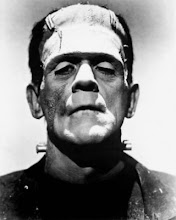
This Love/Hate Story has sparked a series of movies and plays. One such movie was the 1994 Frankenstein.
_ Ann-Marie

picture from www.irishtimes.com/blogs/screenwriter

Friday, March 26, 2010

ROMANTIC LOVERS


Victor was very much in love with his wife, Elizabeth. Everytime he talked about her, he always used terms of endearment and loving words to describe her.He always described her so angelic and loving; this is portrayed throughout the novel. Mary Shelley mirrored her story closely to her and Percy. We see links to her and Elizabeth, Percy and Victor and also how she changed the place where they went for honeymoon to fit the place in the story, keeping in mind, hints to Mary's own experiences.
Romanticism was a huge part of Mary Shelley's lifestyle which she brought to life in her novel, Frankenstein.
Ann-Marie
Gustav Klimt
The Kiss, c1908
at FulcrumGallery.com

Monday, March 22, 2010

Romantic Influences

Mary Shelley was surrounded by three strong Romantic Poet influences such as Percy Bysshe Shelley, whom she married, had encouraged her to write Frankenstein. Shelley referred to himself as Victor when he was a young boy, just like in the novel. Mary Shelley critiqued his beliefs and used them (Shelleyan Idea) as a muse to create the Frankenstein and his creature. Lord Byron, close friend, was able to set the mood for her inspiration of Frankenstein. Samuel Taylor Coleridge, whose poem “Rime of the Ancient Mariner” greatly influenced Mary’s Frankenstein story. The loneliness of the Mariner was similar to the Frankenstein monster’s loneliness.


- Ann Marie