Showing posts with label tamika. Show all posts

Saturday, April 3, 2010

Romantic Influence


Romanticism can be seen in dark literature such as The Scarlet Letter by Nathaniel Hawthorne. In this book the author expresses a great deal of creativity and individualism as he depicts the life of a woman who bares a child from an adulterous relationship.

The poem Rondel by late poet Kevin Nicholas Roberts of the 21st century was greatly influenced by romanticism.

Our time has passed on swift and careless feet,
With sighs and smiles and songs both sad and sweet.
Our perfect hours have grown and gone so fast,
And these are things we never can repeat.
Though we might plead and pray that it would last,
Our time has passed.

Like shreds of mist entangled in a tree,
Like surf and sea foam on a foaming sea,
Like all good things we know can never last,
Too soon we'll see the end of you and me.
Despite the days and realms that we amassed,
Our time has passed.


www.thehypertexts.com/Kevin%20Roberts%20Poet%20Poetry%20Picture%20Bio.htm

-Tamika

Romanticism and Creativity

Romanticism was the valuation of intensely felt emotion, the importance of creative expression, and the possibility of transcending an ordinary experience.

During Mary Shelley's time, "typically the Romantic hero would often be portrayed as a rebel against social conventions and political tyranny".

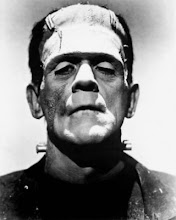
As such, the novel Frankenstein written by Mary Shelley illustrates the romance associated with science. During this time there was a lot of talk of science, life and creation of life. Questions that floated were: Was it possible to create a life? and if so, how and could electricity aid in this process. It was believed that lightening brought about life and could aid in this process. Mary Shelley romanticised real issues discussed during this time and created Frankenstein the novel. Dr. Frankenstein can be viewed as more a tragic hero than geek in a lab coat.

Read more at Suite101: Romantic Literature: Writers and Poets of the Romantic Movement http://weuropeanhistory.suite101.com/article.cfm/romantic_literature#ixzz0k3ENC7xD

-Tamika

Thursday, March 25, 2010

Characteristics of Romanticism


Romantics encouraged the innate, thus creating an atmosphere of creativity,imagination,individuality and a love for nature. In the words of early century poet William Wordworth "an eye made quiet by the power of harmony, and the deep power of joy, we see into the life of things". expresses a thought provoking glance into the beauty that nature has bestowed upon us.

The emotion grabbing movement of Romanticism also depicted mysterious, romantic disillusionment and unreal works of art that made Gothic romance popular. As such, Mary Shelley’s Frankenstein was written with an emotional undertone that allows the reader to see through the eyes of “the monster”, seeking empathy and questioning whether he (the monster) was even a monster at all?

http://www.poets.org/poet.php/prmPID/296
http://www.buzzle.com/articles/romanticism-characteristics-of-romanticism.html


-Tamika

Sunday, March 21, 2010

Art as an emotion...?

"The Enlightenment of the 18th Century was the Age of Reason. Emotions and faith were put on the back burner, while people sought answers to all of life’s mysteries through science, math and logic. By second of half of the 18th Century, when the Enlightenment was in full force, many people began rejecting the idea of basing everything on reason and sought a return to emotions and feelings. This return to emotion would be known as the Romantic Movement.."

The romantic movement originated in western europe and made a huge impact on other countries. The romantic movement would take the reader, watcher or listener from a place of logic to a place of emotion;

http://weuropeanhistory.suite101.com/article.cfm/the_romantic_movement#ixzz0ie0M97ec

-Tamika